
3. AGE's air conditioning system directly utilizes the cold energy of 15°C groundwater. Natural resources already exist that can provide usable cold energy.
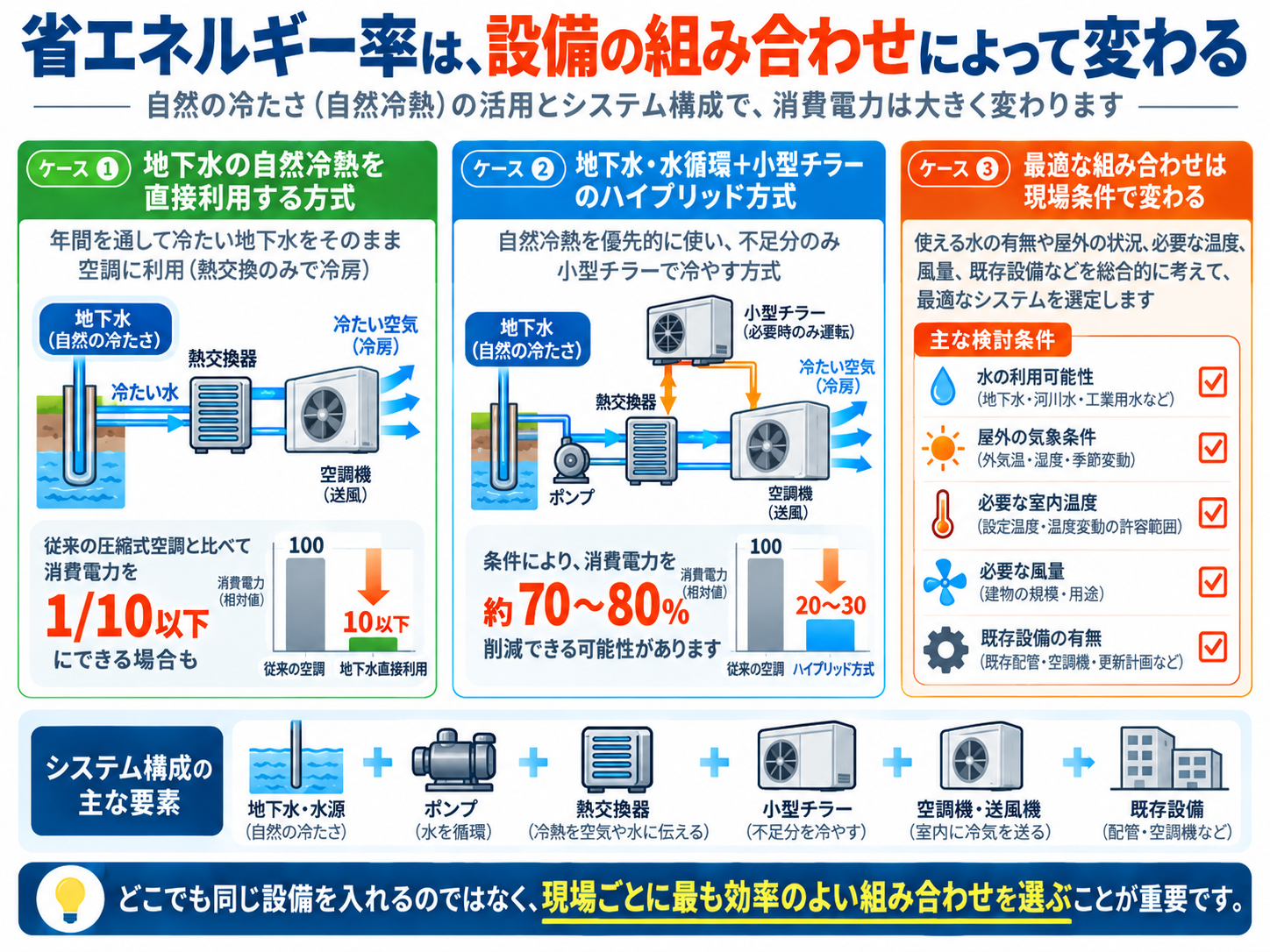
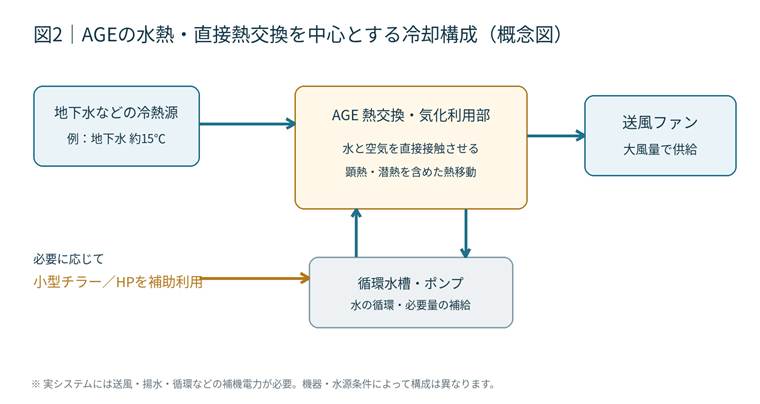
AGE air conditioning system utilizing groundwater and other cold sources
Even on days in midsummer when the outside temperature exceeds 35℃, there is water underground that maintains a relatively stable temperature throughout the year.
For example, in a location where groundwater with a temperature of 15°C is available, there is a temperature difference of 20°C between that and the ambient temperature of 35°C.
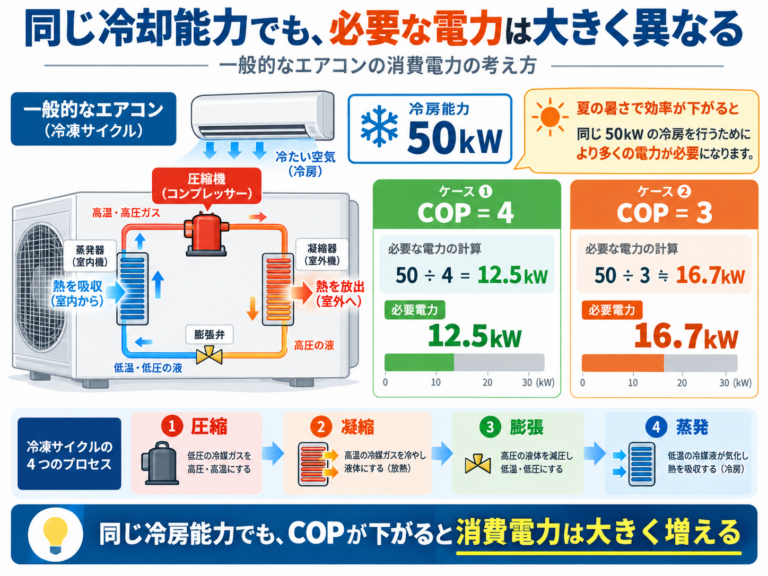
Typical air conditioners create the low temperatures necessary for cooling by compressing and expanding a refrigerant.
In contrast, AGE adopts the approach of utilizing the 15°C cold energy already present in nature as directly as possible to cool the air.
In other words, the idea is that if there is cold water available, there is no need to go to the trouble of using a large amount of electricity to generate more cold water.
This is the origin of AGE's energy-saving air conditioning.
A heat exchange mechanism different from a simple radiator system.
One method of using groundwater for cooling involves passing cold water through a heat exchanger such as a radiator, and then blowing air over its surface to cool it down.
However, because there is a heat transfer surface such as metal between the air and water, there are certain limitations on the heat exchange efficiency and the amount of air that can be processed.
AGE's air conditioning system employs a different method.
Its key features include the simultaneous use of water vaporization at low temperatures and direct heat exchange between air and water.
By bringing air and water into direct contact, the heat contained in the air is transferred to the water.
Furthermore, during this contact process, some of the water vaporizes, absorbing heat of vaporization from the surroundings.
By combining these two heat transfer methods, a cooling mechanism different from simply passing chilled water through a radiator is achieved.
AGE utilizes this mechanism to create an air conditioning system that efficiently cools large volumes of air.
Cooling a large volume of air with minimal power.
In typical air conditioners, a corresponding amount of power is required for the compressor in order to achieve a large cooling capacity.
On the other hand, AGE's groundwater-based air conditioning system directly utilizes the cooling energy of groundwater, making it possible to create a system that does not require a large compressor to compress the refrigerant.
The main power sources are blowers that send out large volumes of air and pumps that circulate water.
AGE has developed a high-airflow type device that can achieve a heat exchange capacity of approximately 50kW using a blower of around 600-650W.
The important thing is not to compare only the temperature of the cold air, but to consider the cooling capacity supplied to the space by looking at both the amount of air being sent out and the temperature difference.
For example, while typical air conditioners blow out relatively cool air, AGE can employ a system that ensures the necessary cooling capacity by blowing out a large volume of air, even if the air temperature is higher.
By combining natural cooling with high-volume airflow technology in this way, it becomes possible to significantly reduce power consumption compared to conventional compression-type air conditioning.
Instead of creating cold or heat, we deliver natural cold and heat.
AGE's air conditioning technology is not simply about making air conditioner compressors slightly more efficient.
The solution involves rethinking the very system that consumes large amounts of electricity to obtain cooling, and instead actively utilizing the temperature differences found in nature.
If there is any available natural cooling source, such as groundwater, river water, or cooling water, we will utilize it directly as much as possible.
And only when natural cooling is insufficient, will mechanical equipment be used to supplement the necessary capacity.
The approach involves first utilizing the power inherent in nature, and then supplementing only the deficiencies with mechanical energy.
This is the fundamental philosophy that underpins AGE's air conditioning system.


 English
 日本語
 Tiếng Việt
 Português do Brasil